Cloud Security Governance: How to Keep Hybrid Environments Secure and Audit Ready
Cloud adoption has changed how organizations operate. Teams can launch applications faster, store data across regions, work remotely, and scale infrastructure without waiting for traditional hardware cycles. But with that flexibility comes a serious challenge: who is responsible for keeping every cloud system secure, compliant, and properly controlled?
This is where cloud security governance becomes essential.
Cloud security governance is not just a technical checklist. It is a structured way to manage policies, access, data, risk, compliance, monitoring, and accountability across cloud and hybrid environments. For organizations that operate in regulated industries or manage sensitive data, strong governance is what keeps cloud growth from turning into uncontrolled risk.
CyberHelm’s GRC Service supports organizations that need security governance, risk management, compliance alignment, and continuous control improvement.
What Is Cloud Security Governance?
Cloud security governance is the framework that defines how cloud environments are secured, managed, monitored, and reviewed. It answers important questions such as:
- Who owns each cloud asset?
- Who can access sensitive systems?
- How is data classified and protected?
- Which policies must teams follow?
- How are misconfigurations detected?
- How are compliance controls tracked?
- What happens when a cloud incident occurs?
Without governance, cloud environments can grow quickly but become difficult to control. Different teams may use different tools, permissions may become too broad, logs may be incomplete, and compliance evidence may be scattered.
A governance framework brings structure to that complexity.
Why Hybrid Cloud Environments Need Stronger Controls
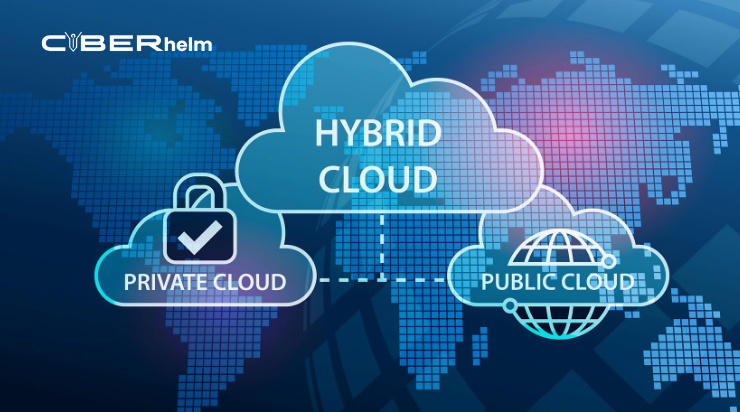
Many enterprises do not run fully in one environment. They often use a mix of on-premise systems, private cloud, public cloud, SaaS platforms, remote endpoints, and third-party applications. This hybrid model is powerful, but it also creates visibility gaps.
For example, a finance system may connect to a cloud database. A customer portal may use a third-party API. Employees may access files from multiple locations. Security teams must understand all these connections, not just the cloud dashboard.
This is why cloud security governance should work closely with Defensive Security. Governance defines the rules, while defensive operations monitor activity, detect threats, investigate incidents, and respond when something goes wrong.
The Biggest Cloud Governance Mistakes
Many cloud security issues are not caused by advanced attacks. They happen because of weak processes, unclear ownership, or rushed deployment.
Common mistakes include:
Mistake | Why It Creates Risk |
No asset ownership | Teams cannot fix risks if nobody owns the system |
Over-permissioned accounts | Users may access more data than they need |
Poor logging | Incidents become harder to investigate |
Weak data classification | Sensitive data may not receive proper protection |
Unapproved SaaS tools | Shadow IT expands the attack surface |
Manual compliance tracking | Audit readiness becomes slow and inconsistent |
No incident playbook | Teams respond late or inconsistently during an attack |
Strong governance reduces these issues by creating clear rules and repeatable processes.
Key Elements of a Cloud Security Governance Framework
A practical cloud governance model should include the following areas.
1. Cloud Asset Inventory
Organizations need a reliable inventory of cloud workloads, applications, storage, databases, identities, APIs, and integrations. If an asset is not visible, it cannot be protected.
This is especially important for companies using multiple cloud providers or development teams that launch new environments frequently.
2. Identity and Access Management
Identity is one of the most important parts of cloud security. Governance should define who gets access, what level of access they receive, how often access is reviewed, and when access should be removed.
Best practices include role-based access, multi-factor authentication, privileged access control, and regular access reviews.
3. Data Protection and Classification
Not all data carries the same risk. Customer records, financial information, healthcare data, employee files, and intellectual property need stronger controls than general public content.
Cloud governance should define data classification levels, encryption requirements, retention rules, backup policies, and secure sharing processes.
4. Configuration Standards
Misconfigured cloud services can expose data, applications, and internal systems. Governance should define approved configuration standards for storage, networking, databases, containers, APIs, and identity services.
Security teams should also monitor drift, which happens when systems slowly move away from approved configurations.
5. Logging and Monitoring
Cloud environments need strong logging across identity events, network traffic, endpoint behavior, application activity, and admin actions. Logs should be reviewed, correlated, and retained according to business and compliance needs.
A wider cyber visibility strategy can also be supported by Cyber Solutions, especially when organizations need intelligence-led monitoring across external and internal risk areas.
6. Vendor and Third-Party Governance
Cloud security does not stop inside the organization. Many companies depend on SaaS vendors, managed platforms, cloud partners, payment tools, and external development teams.
Governance should define how vendors are assessed, what security evidence is required, how access is granted, and how third-party risk is reviewed over time.
7. Incident Response Readiness
Cloud incidents move fast. A compromised account, exposed storage bucket, or misconfigured API can create immediate business risk. Governance should define escalation paths, response roles, communication steps, and post-incident review processes.
For deeper response planning, organizations can also review CyberHelm’s insight on Beyond Detection, which explains why modern security must move from passive monitoring to active response.
How Cloud Governance Supports Compliance
Cloud security governance makes compliance easier because it organizes controls, evidence, ownership, and reporting. Instead of preparing for audits at the last minute, organizations can maintain continuous readiness.
Governance can support:
- ISO 27001
- SOC 2
- GDPR
- PCI DSS
- NIST Cybersecurity Framework
- Cyber Essentials
- Industry-specific privacy and data protection requirements
The most important point is that compliance should not live separately from daily operations. Policies, access reviews, monitoring, and risk assessments should be part of normal business activity.
Governance Should Be Practical, Not Complicated
Some organizations avoid governance because they think it will slow down cloud teams. In reality, good governance should make secure work easier. It should provide clear rules, approved templates, automation, and decision-making support.
For example, instead of forcing every team to design its own security controls, governance can provide approved cloud patterns. Development teams can move faster because the security requirements are already clear.
This approach creates balance. Teams can innovate, but they do it within a secure and controlled framework.
Role of Leadership in Cloud Security Governance
Cloud governance is not only an IT responsibility. It needs leadership support because cloud risk affects business continuity, customer trust, legal exposure, and brand reputation.
Executives should receive clear reporting on:
- Cloud risk posture
- High-priority exposures
- Compliance status
- Incident trends
- Third-party risk
- Remediation progress
- Investment priorities
Cybersecurity becomes stronger when leadership understands risk in business terms, not only technical language. CyberHelm’s background and mission can be explored through the About CyberHelm page.
Signs Your Cloud Governance Needs Improvement
Your organization may need stronger cloud governance if:
- Teams are using cloud tools without central visibility
- Access reviews are inconsistent
- Audit evidence is hard to collect
- Cloud misconfigurations are repeated
- Sensitive data is stored without clear classification
- Security policies exist but are not enforced
- Incident response roles are unclear
- Vendor risk is reviewed only once and then forgotten
These signs do not always mean the organization is careless. They usually mean the cloud environment has grown faster than the governance model.
FAQs
1. What is cloud security governance?
Cloud security governance is the set of policies, controls, roles, and processes used to manage security, risk, and compliance across cloud and hybrid environments.
2. Why is governance important for hybrid cloud security?
Hybrid environments include cloud, on-premise, SaaS, remote users, and third-party systems. Governance helps connect these moving parts so security teams can manage access, data, monitoring, and compliance consistently.
3. How does GRC support cloud security?
GRC supports cloud security by aligning policies, risk assessments, compliance controls, audit readiness, vendor reviews, and reporting into one structured program.
4. How often should cloud security policies be reviewed?
Cloud security policies should be reviewed regularly and whenever there is a major infrastructure change, new regulation, new vendor, new cloud platform, or security incident.
Conclusion
Cloud growth is valuable, but unmanaged cloud growth creates risk. A strong cloud security governance framework helps organizations control access, protect data, monitor activity, support compliance, and respond with confidence.
To build a secure, compliant, and resilient cloud security program, contact CyberHelm to discuss a governance-led cybersecurity strategy for your organization.