Cybersecurity for Small Businesses: Why It’s More Important Than Ever
In today’s digital landscape, cyberattacks are not just a threat for large corporations. Small businesses are increasingly becoming prime targets for cybercriminals due to their often less robust cybersecurity measures. In fact, studies have shown that nearly 43% of cyberattacks target small businesses, and 60% of these businesses go out of business within six months of a cyberattack.
As a small business owner, it’s crucial to understand the risks, recognize the importance of cybersecurity, and take proactive measures to safeguard your digital assets. In this blog, we’ll explore why cybersecurity is vital for small businesses, the threats they face, and the practical steps they can take to protect their data, reputation, and customers.
Why Small Businesses Are Targeted
It’s a common misconception that cybercriminals are only interested in attacking large enterprises. In reality, small businesses often make easier targets for hackers, primarily because they tend to have fewer resources dedicated to cybersecurity. Here’s why small businesses are increasingly being targeted:
- Lack of Security Infrastructure
Small businesses often don’t have the same security infrastructure as larger organizations. This includes firewalls, encryption, or multi-factor authentication systems, which makes them more vulnerable to attacks. - Valuable Data
Small businesses store a wealth of valuable information, from customer data to financial records. Cybercriminals often target this information for identity theft, fraud, or resale on the dark web. - Limited Resources for Protection
Small businesses are often focused on day-to-day operations and may not have the time, knowledge, or budget to invest in comprehensive cybersecurity strategies. This makes them an attractive target for cybercriminals who know that these businesses are often unprepared for an attack.
The Risks Small Businesses Face
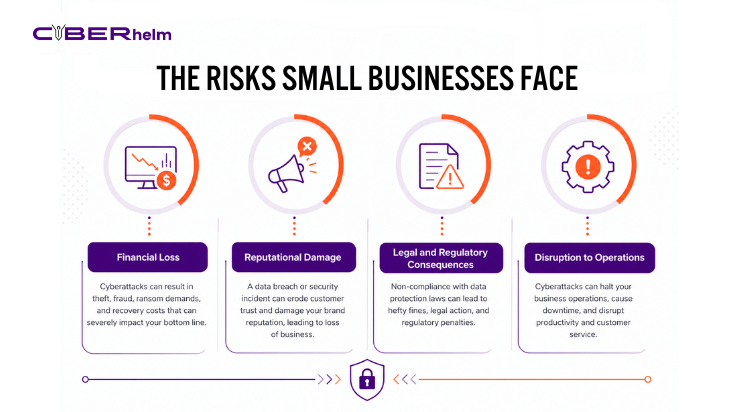
Cyberattacks can have devastating consequences for small businesses, both financially and reputationally. The risks include:
- Financial Loss
A successful cyberattack can lead to significant financial losses, either through direct theft (e.g., funds transferred from bank accounts), ransomware demands, or costs associated with recovering lost data. According to IBM, the average cost of a data breach for a small business is around $200,000 — a sum that many small businesses cannot afford. - Reputational Damage
A cyberattack can damage your business’s reputation and customer trust. If customers believe their sensitive information isn’t safe with your business, they may take their business elsewhere. It can also hurt your brand’s credibility, especially if the attack makes it to the media. - Legal and Regulatory Consequences
Data breaches can lead to compliance violations, especially if customer data is compromised. Small businesses may be subject to fines or legal action under regulations such as GDPR (General Data Protection Regulation) or CCPA (California Consumer Privacy Act). - Disruption to Operations
Cyberattacks can cause significant downtime, especially in cases where malware or ransomware locks systems or data. This disruption can halt business operations, leading to lost revenue and a decrease in productivity.
Practical Cybersecurity Steps for Small Businesses
While the risks are real, there are several steps small businesses can take to mitigate the likelihood of a cyberattack and protect themselves from potential damage. Here are some practical tips:
- Educate Your Employees
Many cybersecurity breaches are the result of human error, such as falling victim to phishing scams or mishandling sensitive information. Educating employees about basic cybersecurity best practices can significantly reduce the risk of a breach. Provide regular training on topics like identifying phishing emails, using strong passwords, and keeping software up to date. - Implement Strong Password Policies
Weak passwords are one of the most common vulnerabilities in small businesses. Ensure your employees are using complex, unique passwords for all systems and platforms. Consider implementing multi-factor authentication (MFA), which requires an additional form of verification (such as a code sent to a mobile device) in addition to the password. - Regularly Back Up Your Data
Backing up your business data regularly is one of the most important preventive measures. If your systems are compromised by ransomware or another attack, a secure backup will ensure that your data can be restored without paying the ransom. Make sure your backups are stored in a secure, offsite location or the cloud. - Use Encryption for Sensitive Data
Encryption is essential for protecting sensitive business data. Whether it’s customer records, financial documents, or employee details, encryption ensures that if data is intercepted, it cannot be read without the decryption key. Implement encryption for data both in transit (e.g., during email communications) and at rest (e.g., stored files). - Install and Maintain Firewalls and Antivirus Software
Firewalls and antivirus software are crucial defenses against malicious cyber activities. A firewall acts as a barrier between your network and the internet, blocking unauthorized access, while antivirus software detects and removes malicious programs. Regularly update both to ensure they can identify the latest threats. - Secure Your Wi-Fi Network
Many small businesses operate on Wi-Fi networks that are not adequately secured. Ensure that your network is password-protected, and use encryption to secure it. Disable any unnecessary features, such as file sharing, and change the default router settings to strengthen your network security. - Work with a Cybersecurity Expert
If cybersecurity is outside your expertise, consider partnering with a trusted cybersecurity consultant or a managed IT services provider. They can help assess your current security measures, recommend improvements, and manage ongoing monitoring and updates to keep your business protected.
Small Business Cybersecurity Is a Business Imperative
Cybersecurity should not be seen as an afterthought for small businesses. As cyber threats continue to evolve, it’s crucial that small business owners recognize the risks and take action to protect their assets, customers, and reputation. By investing in basic cybersecurity measures, educating employees, and partnering with experts, small businesses can build a strong defense against cyberattacks.
The reality is that no business, no matter its size, is immune to cyber threats. However, with proactive steps and a commitment to securing your digital infrastructure, you can significantly reduce the risk and safeguard your business’s future.